MA/MFA Program Description

Mission Statement

Heartwood College of Art (HCA) is licensed by the State of Maine to grant an MFA degree in the studio concentrations of Painting, Printmaking, Drawing, Ceramics, Textiles, Jewelry and Metals. The program is designed for emerging artists, professionals and/or art educators who are seeking a low residency program.

People choose to return to college for a variety of reasons including credentials, professional development or to define the skills that become the tools one needs for expressive direction. Francis Bacon said, "The job of the artist is always to deepen the mystery." Fine art is about exploring ideas, a fascination with imagination and making a connection to the world at large. It is for these reasons that one undertakes the journey through an MFA program, within the setting of an "art community".

The concept of low residency is to integrate the "working world" in which artists reside, with a guided intensive studio commitment. One is not exclusive of the other, it is a balance that teaches one how to make art while living life. Creative efforts reflect personal experience and social comment. The finely honed practice of a working artist establishes a life-long working continuum that allows "ART" to be made out of anything.

Admission Requirements


1)
a. Student should hold a Baccalaureate Degree (BFA, BA with a major in studio art) or equivalent from an accredited college or recognized art school. They should have substantial experience in undergraduate studies in studio art and be able to demonstrate professional skill in their discipline. A transcript from all institutions of higher learning should be sent directly to Heartwood College of Art.

b. A resume and/or a timeline of art related experience.

c. A portfolio of current artwork (minimum of 15 examples, maximum of 40) in photos &/or CD format.

d. Three letters of recommendation from relevant sources (why this student would be a good candidate for Master's program...can they work independently, do they express themselves in a coherent and cohesive manner.)

e. A letter of intent in essay form that would explain the history of the student's development and an outline for a future body of work.

f. An interview in which to present actual work and speak to the importance and the mechanics of this next level of study.

2)
It is possible to transfer an MA degree into the MFA program if the degree is in studio art. Up to 9 graduate level credits can be transferred in without a credit fee charge as long as they are in your field and have been completed within the last 5 years. There is no credit awarded for life experience.

3)
A deposit of $200 is due upon enrollment for each semester. Tuition in full is due two weeks prior to the beginning of the semester. Students who have not paid tuition and fees prior to the start of the semester could be terminated from the program. Unforeseen circumstances that may arise will be dealt with on an individual basis.

Heartwood honors the following refund policy:

a. 75% refunded if student has attended only the proposal session with advisor and mentors.
b. 50% refunded if students have not yet attended the intensive weekend.
c. 0% refunded after the Intensive weekend has taken place.


Degree Requirements


The five year MFA program is comprised of:
36 credits studio in major area of study
6 credits studio outside of major
9 credits academic study, including thesis
9 credits earned at weekend intensives

The three year MA program is a self contained course of study that culminates in significant advancement in a chosen discipline. Completion of the curriculum becomes either a benchmark towards the MFA or a completed course of study unto itself. It offers another opportunity for students of various ages and levels of competency to define their practice.

The three year MA program is comprised of:
18 credits studio in major area of study
6 credits studio outside of major
6 credits academic study, including thesis
6 credits earned at weekend intensives


The cost for the graduate program is $400 per credit (plus travel, lodging and studio fees for the weekend seminars).
60 credit MFA $24,000
36 credit MA $14,400


Programs and Evaluations

The goal of the MFA at Heartwood is to foster the making of art at the highest level. This is accomplished through a command over craft, highly developed creative and critical thinking and a commitment to assembling a major body of work. This 60 credit low residency program is designed for students who work and/or have other life commitments and wish to create a methodical practice for the making of art. This practice will become the conceptual center for all future endeavors.

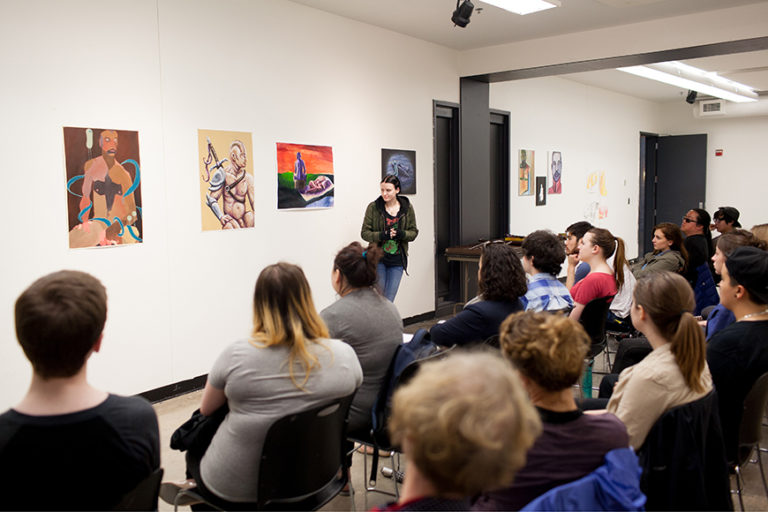
The curriculum for the MFA is designed to be completed in a five year structure of 60 credits. An MA of 36 credits can be earned in three years. The program is broken into 12 credits per year (6) credits each semester. This requires a commitment of roughly 12 hours of studio time per week. One credit is earned each semester by participation in a weekend intensive. During this time students will meet as a group to exhibit their ongoing studio work, share meals, participate in collective critiques, listen to a guest speaker, have "community" discussions, partake in an "exploring" workshop and share ideas on furthering project proposals. The energy and collective wisdom of a group that stays together throughout the MFA program is an invaluable resource to students when working by themselves in the studio.

If there is a need demonstrated, we will set up a "Fast Track Program" that will include a summer session. In that case the 60 credit MFA may be completed in 3 ½ years.

Each session begins with student presentations of their semester's proposal. The meeting is attended by an advisor and two mentors who will monitor their progress throughout the course of study. At this time the proposal may be amended. The student is required to submit examples of work to their advisor and mentors at three intervals during the semester, either via email or hard copy.

The evaluation of student performance is determined by a committee of two mentors, the advisor and the student. Self evaluation is a critical component. Evaluations are based on the following criteria:
A. Did the student follow and execute the outline as described in the initial proposal and within the framework of the time line?

B. Did the presentation of material fulfill the professional guidelines as determined by the initial proposal?

C. Is the student sequentially developing steps toward a professional practice?

The following questions would be evaluated on a scale of 1-5 (5 being the most successful).
1. Did they start the semester with confidence in their ability to be successful?
2. Are they willing to entertain doubt? (Can they successfully resolve an artistic struggle? When they run into a roadblock, do they know how to get around it, how? What is the value of having experienced the doubt, and do they have the tools to resolve the inevitable failures that occur in the creative process?)
3. Ultimately, are they prepared to extend the effort it takes to accomplish their goals?


The Weekend Intensive will be evaluated by the advisor under a different set of criteria, based on:
a. Participation in group critiques
b. Presentation of current work
c. Effort within the "Community of Artists" dialogue
d. Workshop energy
e. Respect for others and Studio practice (in order to move forward)


At the end of every Weekend Intensive, each student will receive a grade for one semester hour. This grade will be averaged into their studio semester hour grades at the end of the semester.

At the Master's level it is important that the student and team acknowledge unsatisfactory performance before it reaches a critical juncture. It may be recommended that a student take a semester off or terminate the course of study if success is not achievable at that time. In order for a student to re instate they must submit a "continuum form."

The procedure for assessment includes a final evaluation meeting with the student, where presentation of written and visual materials will be reviewed. Team members complete an evaluation form at the end of each meeting. The written "comment" portion of the evaluation is due in the Dean's office within two weeks end of the semester.

Heartwood will assign grades every semester according to the established system as determined by most graduate degree programs of Higher Education.

Students will be placed on academic probation if they fail to maintain a grade point average of 3.0. Students will be notified of their probationary status by a letter from the Dean of Academic Affairs.

Individual Components


The low residency MFA is a studio based program. It differs from an academic program in that its progression is based on completing the steps set forth by the student and mentors in the proposal/ evaluation process. Required credits for the MFA are outlined under Degree Requirements. Specific courses are not described because the course of study is self determined.

Individual development includes recommendations for sequential study as directed by the mentors. The "Intensive" weekends are designed to gain experience in a multitude of disciplines that may be referenced or utilized within each students' individual study. These disciplines would be explored in a series of workshops and lectures offered midway through each semester.

A unique planned educational experience of the MFA program includes the possibility of students being able to study "outside the walls" of Heartwood and their own studios. An example of this might include participating in workshops at Haystack School of Crafts, Penland or Skowhegan School of Painting. This opportunity would enable students to study with masters in their field and "transfer" credits into their individual programs. It is possible to accumulate up to 12 "outside" credits into the individual course of study. Approximately 10% of tuition can be applied towards the cost of such programs.

These programs are evaluated in the following manner and require supporting documents including:
a. a syllabus of the course
b. a bio of the instructor
c. a student portfolio review at the conclusion of the course
d. a written evaluation of the course by the student
e. a "sign off" form by the instructor
f. an evaluation of the course "value" by the advisor/mentor team

When workshops are taken under the "university without walls" component, the curriculum and its faculty are pre approved by Heartwood.
Example: Flowing Steel Workshop, taught by David Burtt at Haystack for a weekend workshop = 1 semester hour.

Faculty/Mentors


The on campus faculty can serve as mentors in Painting, Drawing, Printmaking, Ceramics, Jewelry and Metals, and Fiber. Additional mentors who are working artists in our community are also available. If MFA students are traveling from a distance, they may wish to find mentors in their area. The qualifications of these mentors must meet the standards of the Heartwood advisory committee.

Heartwood's outstanding faculty of working artists are bound together by a shared truth that passing on what we have learned is a fundamental part of the artistic conversation. Their talents have earned many of them national recognition. Without exception, each faculty member is prepared to "go the distance" with every student to ensure that the educational experience gained at Heartwood is truly internalized and will become a cornerstone to future work.

For further information contact Heartwood College at 207-985-0985


People who work with their hands and their heads are craftsmen.
People who work with their hands, their heads, and their hearts are artists.
~ St. Francis of Assisi


123 York Street (Route 1 South), Kennebunk, ME 04043 | 207-985-0985 | hca@heartwoodcollegeofart.org